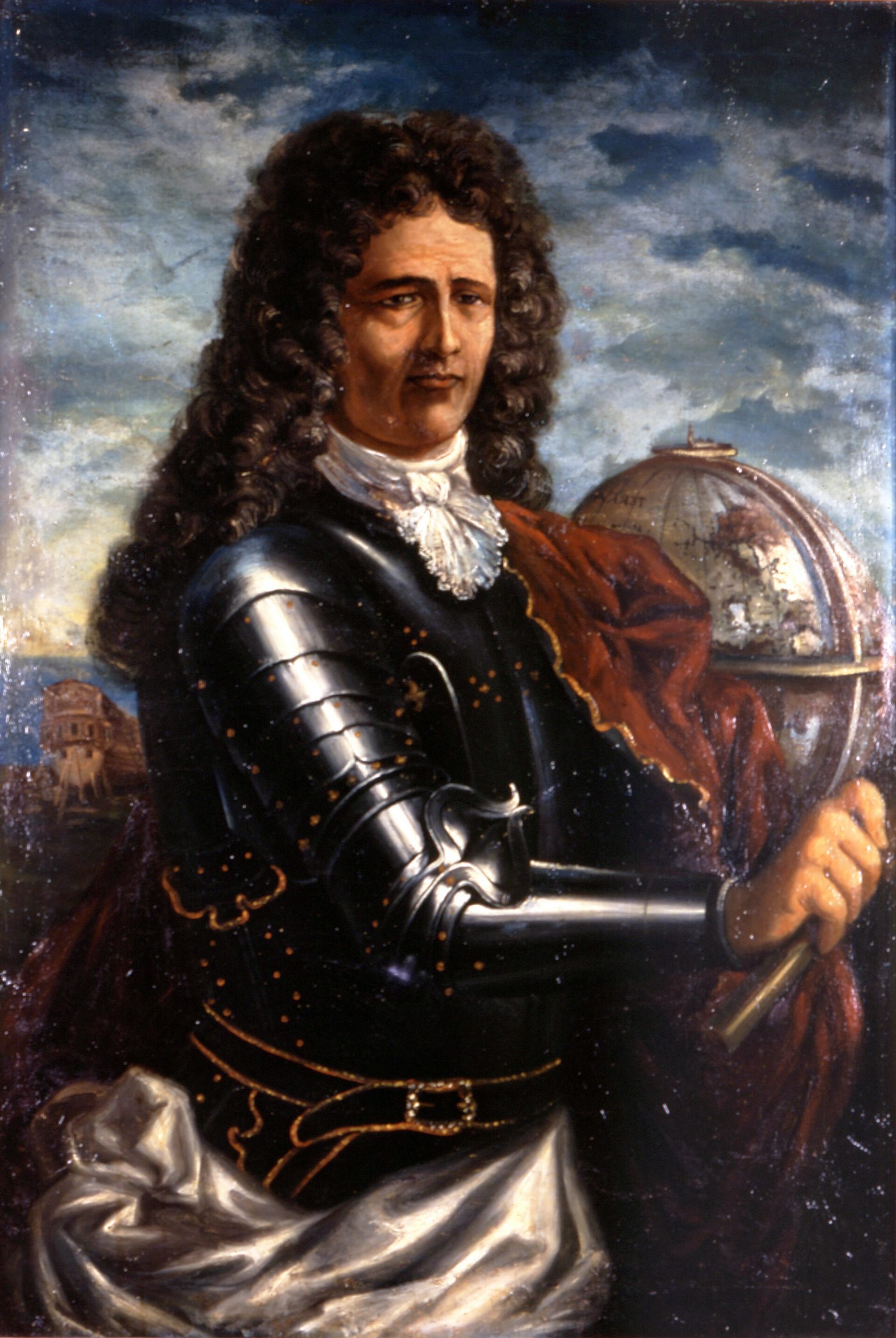
from fragmentation three deck. from fragmentation three deck.
Relacionado: Ferrol: the arsenal that the 18th century Navy renewed
Relacionado: The Mediterranean privateering and the Spanish privateers of the 18th century
from fragmentation three deck.
How the Bourbons, science, and the shipyards of Cuba and Cantabria forged a navy that challenged the oceans
Spain didn’t have a navy at the dawn of the 18th century – it had several. Yet from the ashes of fragmentation and defeat rose the third-most-powerful fleet in the world, built on Cuban cedar, Cantabrian oak, and a century of relentless shipbuilding innovation.
At the start of the 18th century, Spain did not have a navy. It had several. The naval forces were scattered across squadrons of the Ocean Sea, the Carrera de Indias, Naples, Sicily, and the Guards of Cartagena – each with its own treasury, its own command, its own idea of how things should be done. This Habsburg inheritance, already flawed, was shattered during the War of the Spanish Succession (1701-1714), which split the country in two.
While the kingdoms bled, the 17th-century galleon – that tall, pot-bellied, slow hulk designed to carry silver, not to fight – began its retirement. In its place came a different beast: the ship of the line, bred for battle in formation, with its batteries crammed onto two or three decks and a hull tuned to deliver the heaviest possible broadside. Out of the ashes of disaster, the Bourbons ignited what would become the third-largest navy in the world.
From Passaro to Awakening: 1718, the Year Spain Realized It Was Going Wrong
Philip V ascended the throne in 1700 with new ideas. But the naval machine did not respond. The Battle of Cape Passaro, August 11, 1718, was the wake-up call. The Spanish squadron, under the command of Antonio Gaztañeta – the country’s first great naval architect – attempted to cover the Sicilian coast against the Royal Navy. Result: 16 ships lost against 22 British.
Passaro made it clear that patchwork navies could not measure up against a real naval power.
Milestones:
- 1700 – Naval fragmentation inherited from the Habsburgs
- 1714 – Creation of the Secretariat of the Navy. Unification of squadrons
- 1718 – Defeat at Cape Passaro. Twelve thousand men lost
- 1720 – Gaztañeta publishes his system of measurements
- 1732 – Launch of Real Felipe (114 guns), Spain’s first three-decker
- 1748-1754 – Ensenada Plan: 60 ships of the line ordered in six years
- 1752 – Jorge Juan implements the English system
- 1769 – Launch of Santísima Trinidad in Havana
- 1784 – Romero Landa standardizes the series
- 1805 – Trafalgar: 11 ships lost in a single morning
The Bourbon Refoundation: Patiño and Ensenada
1714 is year zero. The Secretariat of the Navy is created, and all squadrons come under a single command. The Royal Navy is born.
José Patiño centralized timber purchases and established permanent shipyards in Havana, Ferrol, Cartagena, and La Carraca. He was succeeded by the Marquis of Ensenada, whose 1748-1754 Plan ordered 60 ships of the line.
The 1748 regulations priced everything: length, beam, depth, in codos de ribera and Burgos feet.
Three Systems, Three Ways of Understanding the Sea
Gaztañeta (1720-1752): When a Ship Was a Floating Wall
He published «Proportions of the Most Essential Measurements for the Construction of Ships and Frigates.» Short, wide-hulled ships: keel of 70 codos (38 m), beam of 16 codos (8.7 m). Length-to-keel ratio: 3.3:1. Three decks, like the Real Felipe (1732, 114 guns, launched at Guarnizo, Cantabria). They could take punishment but were slow (6-7 knots).
Jorge Juan (1752-1784): The Spy Who Built Faster Ships
He traveled to England (1749-1750) in disguise, toured the shipyards of Deptford, Portsmouth, and Woolwich, and took notes. A hybrid system. Longer length: ratio of 3.6:1. For a 70-gun ship: 164 feet (46.3 m) in length, 42 feet (11.8 m) in beam. Ships up to 4 knots faster. Flagship: San Juan Nepomuceno (1766, 74 guns).
Romero Landa (1784-1805): The French Touch
He trained in France. Moderate sheer, continuous gun decks, greater range. He designed 74-gun ships (San Ildefonso class, 1785) and 112-gun ships (Santa Ana and Príncipe de Asturias classes).
| System | Period | Architect | Key Feature | Flagship |
| Gaztañeta | 1720-1752 | A. Gaztañeta | Short, wide hull, three decks, slow but tough | Real Felipe (1732) |
| Jorge Juan (English) | 1752-1784 | Jorge Juan | Elongated length, raked sternpost, 4 knots faster | San Juan Nepomuceno (1766) |
| Romero Landa | 1784-1805 | J. Romero Landa | French influence, reduced sheer, continuous gun decks | San Ildefonso (1785) |
Titans of Timber
A ship of the line held over 700 men.
| Name | Year | Guns | Shipyard | Fate |
| Real Felipe | 1732 | 114 | Guarnizo | Broken up in 1750 |
| Santísima Trinidad | 1769 | 136 | Havana | Sunk at Trafalgar (1805) |
| San Juan Nepomuceno | 1766 | 74 | Guarnizo | Captured at Trafalgar |
| Príncipe de Asturias | 1794 | 112 | Havana | Broken up in 1814 |
| Santa Ana | 1784 | 112 | Ferrol | Sunk in 1816 |
The Santísima Trinidad: launched in Havana (1769) as a three-decker of Cuban cedar; in 1778 a fourth deck was added along with 136 guns. 59.5 m in length, 16.7 m in beam, over 1,000 men. By Trafalgar it was slow, dismasted, and cannonaded until it sank.
The Santa Ana (112 guns): Romero Landa’s best design. Fast, well-armed. Flagship at Trafalgar. Its hull of Cantabrian oak was so tough that the British captured it and put it into service.
Trafalgar: The Morning That Changed Everything
October 21, 1805. 11 ships lost in a single day. Spanish vessels well-built but moored for months due to lack of provisions, inexperienced crews. The Royal Navy patrolled the Atlantic with battle-hardened crews.
The designs of Jorge Juan and Romero Landa were copied by other navies. Cuban cedar remained prized.
What Remains of Those Ships
The evolution of the Spanish ships of the line: the story of a country that learned from its defeats.
Glossary
- Ship of the line: Warship with 2-3 gun decks, 45-60 m, 50-136 guns.
- Codo de ribera: Spanish naval unit of length, ~0.574 m.
- Sheer: The curvature of the deck from bow to stern.
- Freeboard: Distance between waterline and deck.
- Broadside: Simultaneous discharge of all cannons on one side.
- Hull (underwater body): The submerged part of the hull.
Artículos relacionados
Fuentes y recursos
Ver también: PARTE 3: La Habana 1762: cuando la logística falló | Viento en las velas: cómo la Royal Navy venció al escorbuto. Fuente: From Fragmentation to a ThreeDeck Colossus The Genesis Splendor and Decline of the 18thCentury Spanish Royal Navy.
Ver también en el glosario: Artículos Relacionados, Artículos Relacionados, Artículos Relacionados, Fuentes Y Recursos, Fuentes Y Recursos, Ship Of The Line, Real Armada, La Carraca