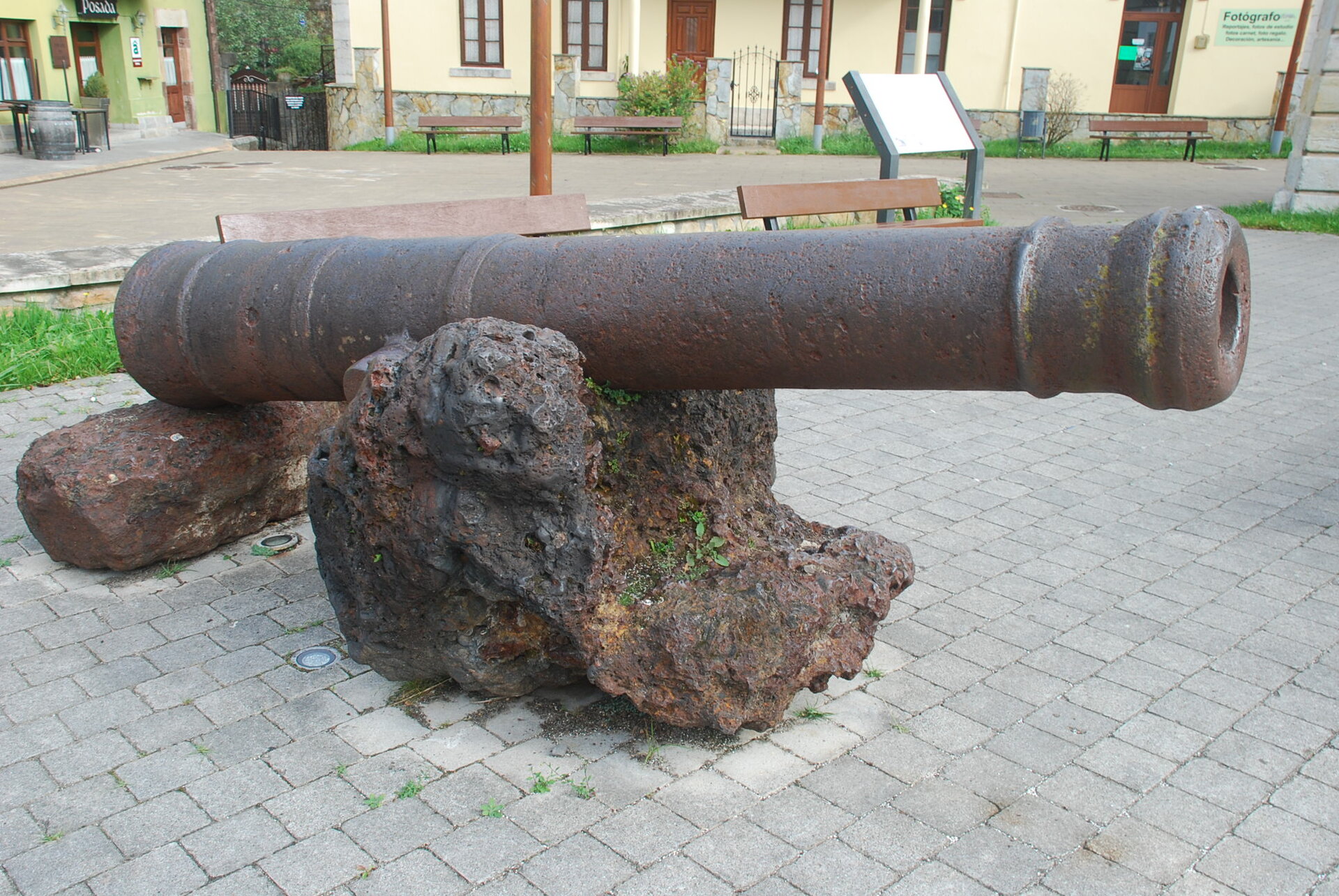
naval artillery cannons carronades. naval artillery cannons carronades.
Relacionado: NAV-S25 · Ciencia y poder naval en la Ilustracion
Relacionado: NAV-S26 · Herencia de la construccion naval
naval artillery cannons carronades.
naval artillery cannons carronades.
Introduction
Naval artillery was the decisive element in 18th-century combat. The evolution of naval guns — from heavy bronze cannons to modern iron carronades — completely transformed combat tactics at sea. Spain, with a foundry tradition dating back to the 16th century, maintained a high level of artillery production, although it could not always compete in quantity with the burgeoning British industry. This article examines the types of pieces, their manufacture and their tactical employment in the Spanish Navy of the 18th century.
Bronze and iron cannons
At the beginning of the 18th century, Spanish naval cannons were mostly cast in bronze, an alloy of copper and tin that offered great resistance to corrosion but was very expensive. Each 24-pounder bronze cannon cost the equivalent of several months’ salary of a ship’s captain. For this reason, over the course of the century, the Navy gradually replaced bronze with cast iron, which was cheaper and more durable. The foundries of La Cavada (Santander) and Liérganes produced iron cannons of excellent quality for decades, although production was never sufficient to supply the entire fleet. As the RHN notes, dependence on imports of Swedish iron and English cannons (via smuggling) was a constant problem for Spanish artillery.
Calibres and types of pieces
18th-century naval artillery was classified by the weight of the projectile, that is, by calibre. The most common calibres were:
- 36-pounder cannons: the heaviest pieces, mounted on the lower gundeck of first-rate ships.
- 24-pounder cannons: the standard calibre of the lower gundeck on 74-gun ships.
- 18-pounder cannons: mounted on the upper gundeck.
- 12- and 8-pounder cannons: used on the quarterdeck and forecastle.
- Howitzers: short, large-calibre pieces designed to fire explosive shells on a curved trajectory. They were especially useful in coastal bombardments.
- Carronades: introduced by the British Navy in the 1770s, they were short, light, large-calibre guns that fired at short range. The Spanish Navy adopted them at the end of the century, mounting them on the quarterdeck of many ships.
Todoavante documents that Spanish artillery experimented with 48-pounder pieces, but they proved too heavy and too slow to reload, so they never became widespread.
Manufacture: foundries and suppliers
The most important foundry in Spain was the Real Fábrica de Artillería de La Cavada, in Cantabria, active since 1635. There the iron cannons that armed the Navy’s ships throughout the 18th century were cast. Foundries also operated in Seville, Barcelona and Málaga, although with lower production. In the Americas, the foundries of Mexico and Peru supplied bronze cannons for ships built in the arsenals of Havana and Veracruz. The quality of Spanish iron was recognised throughout Europe, but production was limited by the availability of iron ore and charcoal. The RHN highlights that, in times of war, the shortage of cannons was a critical problem: many Spanish ships put to sea with fewer pieces than regulation required, or with pieces of different calibres that complicated ammunition supply.
Spanish artillery tactics
Spanish artillery tactics in the 18th century differed from British ones. While the British sought close-range combat, discharging devastating broadsides against the enemy hull, the Spanish preferred to fire at medium range, aiming at the masts and rigging to immobilise the opponent and then board. This tactic, inherited from the previous century, proved obsolete in the face of British artillery superiority. Nevertheless, at the end of the century, the most modern Spanish officers — such as Gravina and Churruca — adopted English tactics, training their crews in rapid rate of fire and accurate aiming. At Trafalgar, some Spanish ships achieved rates of fire comparable to the British, although the lack of joint practice and the heterogeneity of the combined fleet made it insufficient.
Sources and resources
- Revista de Historia Naval (RHN), no. 28, 1990: “La artillería naval española en el siglo XVIII”, by José María Mújica.
- Revista de Historia Naval (RHN), no. 56, 1997: “Las fundiciones de La Cavada y la artillería de la Armada”, by José María Gárate.
- Todoavante — “Artillería naval española: cañones, carronadas y obuses”
- Archivo General de Simancas — Secretaría de Marina, artillery records.
- Museo Naval de Madrid — collection of cannons and naval artillery models.
- Real Fábrica de Artillería de La Cavada — Wikipedia.
Related articles
- PARTE 3: La Habana 1762: cuando la logística falló
- PARTE 2: Astilleros, pertrechos y víveres: la máquina logística de la Armada
- PARTE 1: El sistema de flotas y galeones: la logística que sostenía un imperio
Ver también: PARTE 3: La Habana 1762: cuando la logística falló | Viento en las velas: cómo la Royal Navy venció al escorbuto. Fuente: Naval artillery cannons carronades and howitzers.
Ver también en el glosario: Artillería Naval, Astilleros, Escorbuto, Víveres, Calibre
Leave a Reply