navy born alfonso and. navy born alfonso and.
Relacionado: Viento en las velas: cómo la Royal Navy venció al escorbuto
Relacionado: Castilla Did Not Look at the Sea: Origins of the Castilian Navy (13th Century)
navy born alfonso and.
A Navy Is Born: Alfonso X and the Creation of the Castilian Navy
The Sea, the Unfinished Business of the Reconquista
When Ferdinand III conquered Seville in 1248, the kingdom of Castile looked out upon the Mediterranean with a substantial coastline for the first time. But that victory, achieved with ships brought from the Cantabrian coast under the command of Ramón Bonifaz, revealed a strategic deficiency that his son and successor, Alfonso X the Wise, was the first to diagnose clearly: without a permanent navy, any territorial advance was vulnerable. The Muslim supply routes through the Strait of Gibraltar remained open, and the newly conquered coasts lacked their own naval protection.
The chronicler and auditor general José Cervera Pery, in his seminal study Las empresas navales del reino de Castilla —included in the Castilla y el mar series— notes that Castile became a maritime kingdom when Alfonso X consolidated his father’s territorial conquest, incorporating the towns of the western Andalusian coast (Cádiz, El Puerto de Santa María, and Cartagena) and repopulating them with seafaring people from the Cantabrian region. The sea ceased to be a frontier and became both an opportunity and an open front.
The Seville Shipyards: The First Royal Arsenal
Alfonso X’s first step was a tangible one. In 1252, barely a year after ascending the throne, he ordered the reconstruction of the Almohad shipyards of Seville, a vast complex of 19 vaulted bays covering a perimeter of 1,600 feet and reaching 45 feet in height (approximately 426.5 by 12 meters). They were by far the largest naval facilities on the Peninsula. To put them into operation, the king reserved certain forests for timber and attracted skilled workers through tax benefits, creating a payroll of privileged workers who ensured the fleet’s maintenance.
The historian Eduardo Aznar Vallejo, in his work La guerra naval en Castilla durante la Baja Edad Media, also documents the shipyards of Santander, though these were much more modest: four bays totaling about 68 by 37 meters. The researcher notes that these facilities were reserved for light vessels — galleys and similar types — which constituted a small portion of the northern fleet, composed mostly of round-hulled ships such as naves and naos from the Cantabrian coast.
The Corps of Cómitres: Seamen in the King’s Service
One year after setting the shipyards into motion, Alfonso X laid the foundations of a stable naval organization. In 1253, he concluded an agreement with the master of the Order of Santiago, Pelayo Pérez Correa, by which the military order committed to maintaining a galley with 200 men for three months each year, in exchange for 1,600 aranzadas of olive groves in the Aljarafe region. Any booty obtained would be split equally between the king and the master.
That same year — or perhaps already in 1254 — the monarch signed a contract with ten cómitres (galley masters). Each one undertook to maintain at his own expense a galley, to be rebuilt or replaced every nine years, and to keep it ready for navigation and combat. In exchange, the king granted them a landed estate whose revenues could cover the obligation. They were required to keep five armed men on board the galley and to replace it within seven years if it were lost. Booty was again split fifty-fifty. The first cómitres were mostly French, Catalan, and Genoese, along with some Cantabrians: the Crown imported technical knowledge from the Mediterranean to place it at the service of the new Castilian navy.
As Miguel Ángel Ladero Quesada, member of the Royal Academy of History and author of the study El almirantazgo de Castilla en la Baja Edad Media (included in the Castilla y el mar series), explains, King Alfonso X pursued an active naval policy in the early years of his reign, and the agreement with the cómitres was a key piece of that framework. Each galley was to carry 100 men clad in iron, 50 lances, 4 stirrup crossbows and 2 two-foot crossbows, as well as 1,000 quarrels (arrows of toasted wood), 10 shields, and 10 iron helmets.
The Admiralty of Castile: An Institution for the Ages
In December 1254, Ruy López de Mendoza, one of the three arbiters of the Repartimiento of Seville and its territory, began to be styled Admiral. It was not an empty title: the admiral not only commanded the fleet in battle but also served as judge in maritime affairs, oversaw ship construction, and administered the royal ports. That office would become one of the longest-lived institutions in Spanish history, enduring for centuries.
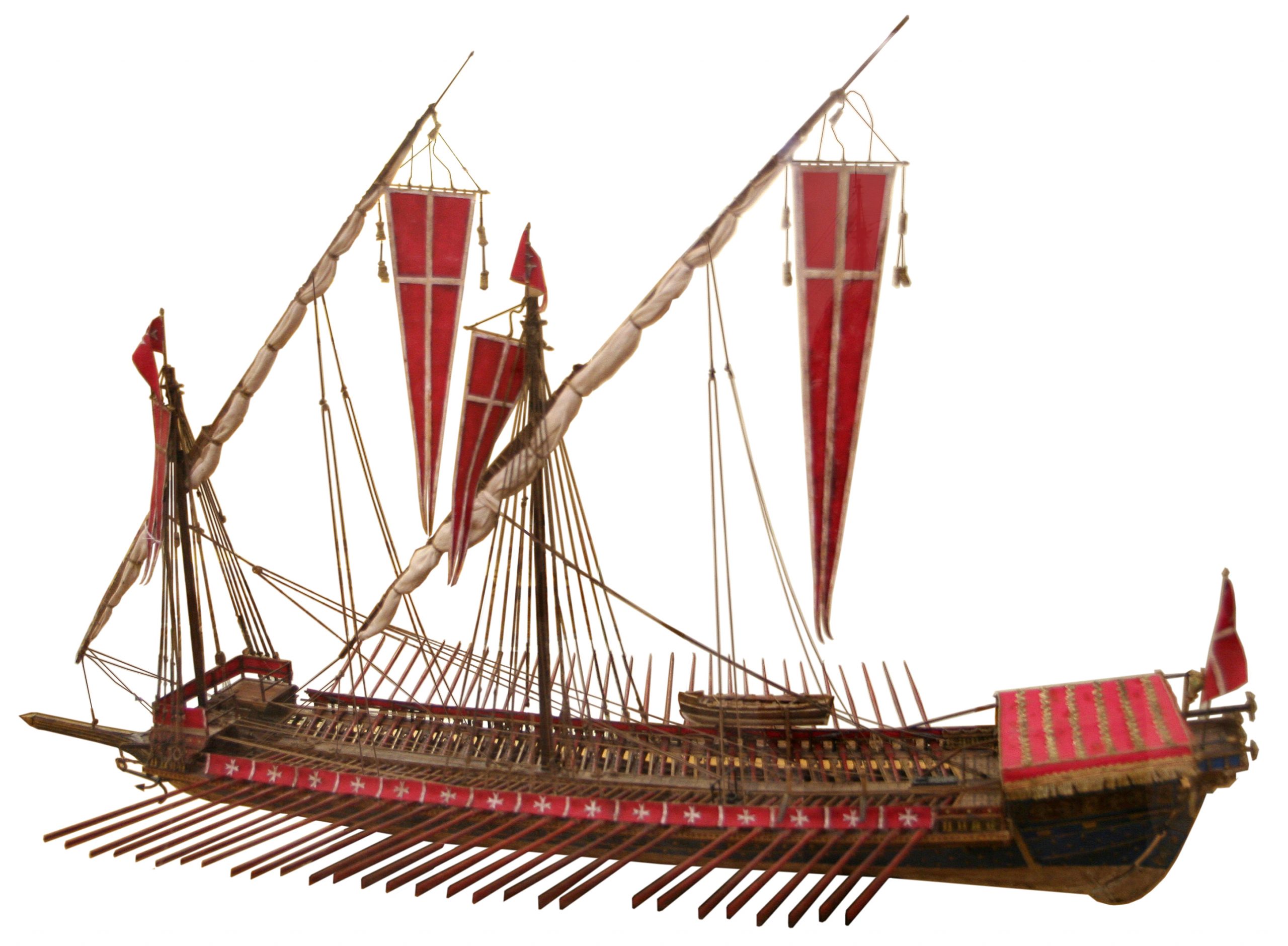
The Siete Partidas, the great legal code promoted by Alfonso X, devoted meticulous attention to naval warfare. It distinguished between a flota (a body of galleys and ships serving the king with a large company of men, akin to a land army) and an armada (a smaller number of vessels prepared for a specific occasion). It enumerated the types of vessels — from naves and carracks to galleys, galiots, taridas, saetías, and leños — the weapons (darts, stirrup and windlass crossbows, swords, axes, hooked lances), and the equipment. Even the shipboard provisions were recorded: hardtack, salted meat, legumes, cheese, and garlic to prevent spoilage, along with water, cider, and wine.
The law also established how to divide the spoils of war. If the king provided all elements — ships, wages, armament, and food — he received the full profit. Otherwise, he shared it in quarters with the contributors. From the profits of private individuals, the king took a fifth, and his admiral a seventh.
The Order of Santa María de España and the African Project
Alfonso X did not stop there. Seeing the need for a permanent naval force with religious inspiration, he created the Order of Santa María de España «for the business of the sea,» headquartered in El Puerto de Santa María — a town the king himself had founded — with convents in Cartagena, San Sebastián, and La Coruña. The order was conceived to fight Muslims at sea and protect the Castilian coasts. However, its existence was short-lived: it disappeared in 1280, absorbed by the Order of Santiago, which took over its lordships and revenues.
The Wise King also planned the so-called «Crusade of Africa,» for which he sought help from the Aragonese and English monarchs. Of that enterprise, only the brief occupation of Salé, on the Atlantic coast of present-day Morocco, in 1260 remains. An expedition led by Juan García de Villamayor, the king’s steward, acting as adelantado mayor de la mar — a temporary office, not to be confused with that of admiral, as Ladero Quesada clarifies — which had no continuity. Castile still lacked the logistical resources to sustain long-range overseas campaigns.
The Algeciras Campaign: The Fleet in Action
The fighting potential of the navy created by Alfonso X was put to the test in the campaign against Algeciras in 1278–1279. According to the Chronicle of Alfonso X, the Castilian fleet numbered as many as 80 galleys and 24 naves, not counting galiots, leños, and other smaller vessels. For its time, it was an imposing force.
However, on July 25, 1279, Admiral Pedro Martínez de Fe suffered a resounding defeat at the hands of the Muslim fleet off Algeciras. The disaster was total: the fleet scattered, the admiral had to take his ship to Tangier and remained a prisoner for two years. That catastrophe, combined with the political crisis of the final years of his reign, led Alfonso X to abandon his naval projects. Yet the seed had already been planted. As the study from the Castilla y el mar series notes, the sum of Alfonso’s initiatives — shipyards, cómitres, admiralty, legislation — constituted «a notable war-fighting power» that his successors would inherit and expand.
The Legacy: From Alfonso X to the Battle of the Strait
The torch was taken up by his son Sancho IV, who, facing the Marinid threat, hired the services of the Genoese Benedetto Zaccaria — one of the most experienced seamen of the Mediterranean, a veteran of Constantinople and the Battle of Meloria — with 12 armed and equipped galleys. Zaccaria won a great victory over the Marinids on August 6, 1291, and intervened decisively in the conquest of Tarifa (October 1292). But the most brilliant chapter of that early Castilian navy would be written in the following century, under Alfonso XI, during the so-called «Battle of the Strait.»
Ladero Quesada, in his meticulous study of the admiralty, highlights the figure of Jofre Tenorio, admiral to Alfonso XI between 1314 and 1340. His naval intervention during the royal campaign of 1326 against Granada — guarding the coast with 6 galleys, 8 naos, and 6 leños — illustrates the operational capability that the Castilian navy had achieved. Tenorio also defeated the Portuguese fleet of the Genoese Manuel Pessaño in September 1337 near Lisbon.
Just three years later, however, Tenorio would die in an unequal fight against the Marinid fleet in the Bay of Algeciras. His head, according to the Chronicle of Alfonso XI, was cut off by the Muslims. War at sea, as the legal literature of the time collected in the Castilla y el mar series already acknowledged, «is like a forsaken thing, and of greater peril than war on land.»
From the Cantabrian Coast to the Strait: The Fruits of Alfonso’s Policy
The creation of the admiralty by Alfonso X was not a symbolic gesture. In the reign of Peter I — called the Just by some, the Cruel by others — naval endeavor reached extraordinary heights. The historian José Cervera Pery, in the work included in Castilla y el mar, offers a revealing fact: after suffering a setback at Guardamar in 1358, in which he lost nearly his entire fleet to a storm, Peter I did not abandon his naval efforts, and within eight months twelve new galleys were built and fifteen of the old ones were refitted. That capacity for recovery, impossible without the institutional and material base created by Alfonso X, allowed Castile to do battle with the powerful Aragonese squadron on its own coasts.
The chronicler Jerónimo de Zurita summarized the novelty of the situation with these words: «in times past, the kings of Castile were never so sovereign at sea that they could undertake war on their own except against the Moors, and that with the help of the kings of Aragon and the Genoese, because of the great difficulty they had in arming galleys.» By the time those lines were written, the situation had changed completely.
A curious later episode shows just how much. After relations between the two kingdoms were restored, as Aznar Vallejo documents, Castile asked Aragon to send men instead of galleys, arguing that «the Moors had no fleet superior to that of the king of Castile.» The request, read in its context, is a clear indicator of the confidence — and the reality — of the naval power that Alfonso X had set in motion a century earlier.
The crowning touch of that long voyage would come under John II, in the final stages of the Hundred Years’ War, when — according to Cervera Pery — «a powerful fleet facilitated, thanks to a brilliant naval campaign, the incorporation into French territory of the strongholds of Bordeaux and Bayonne.» Without the navy that Alfonso X imagined and built, none of those achievements would have been possible.
Conclusion
Alfonso X the Wise was not only a lawgiver and a poet; he was also the architect of the first Castilian war navy. His shipyards of Seville, his corps of cómitres, the creation of the Admiralty, and the regulation of naval warfare in the Siete Partidas constitute the foundations upon which Castile’s maritime power was built. Although his most ambitious projects — the conquest of Africa, the Order of Santa María de España — remained unfinished, the machinery he set in motion proved its effectiveness for generations. From the Cantabrian coast to the Strait of Gibraltar, from the Atlantic to the English Channel, the navy born under Alfonso X became a decisive instrument of Castilian policy. Without it, the Reconquista would have been incomplete. And without it, the leap overseas that would change world history two centuries later can hardly be understood.
Sources and Further Reading
– Aznar Vallejo, Eduardo. La guerra naval en Castilla durante la Baja Edad Media. En la España Medieval, 2009, vol. 32, pp. 167–192. (Series: Castilla y el mar)
– Cervera Pery, José. Las empresas navales del reino de Castilla (1248–1474). Patronato del Alcázar de Segovia, 2003. (Series: Castilla y el mar)
– Ladero Quesada, Miguel Ángel. El almirantazgo de Castilla en la Baja Edad Media. Siglos XIII a XV. Real Academia de la Historia. (Series: Castilla y el mar)
– Cuaderno Monográfico no. 72 del Instituto de Historia y Cultura Naval. La Marina de la Corona de Aragón. Madrid, 2016.
– Pérez Embid, Florentino. La marina real castellana en el siglo XIII. Anuario de Estudios Americanos, 6 (1969), pp. 141–185.
– Calderón Ortega, José Manuel. El almirantazgo de Castilla. Historia de una institución conflictiva (1250–1560). Alcalá de Henares, 2003.
Artículos relacionados
- Viento en las velas, muerte en las entrañas: cómo la Royal Navy venció al escorbuto antes de saber qué era
- Leones de madera y plata: La verdadera historia de la Real Armada que desafió a la Royal Navy
- The ship San Ildefonso: a 74-gun ship of the Spanish Navy
- Glosario de Historia Naval
Fuentes y recursos
- Archivo General de la Marina «Álvaro de Bazán»
- PARES – Portal de Archivos Españoles
- Todoavante – Historia naval española
Ver también: PARTE 3: La Habana 1762: cuando la logística falló | Viento en las velas: cómo la Royal Navy venció al escorbuto. Fuente: A Navy Is Born Alfonso X and the Creation of the Castilian Navy.
Ver también en el glosario: Artículos Relacionados, Artículos Relacionados, Artículos Relacionados, Fuentes Y Recursos, Fuentes Y Recursos, Real Armada, Escorbuto, Granada
Leave a Reply